Wednesday, April 22, 2009

Breathe easy People's Car, Nano, not that polluting

In spite of what Ratan Tata might say, Sunita Narain and RK Pachauri would have spent an uneasy night. The prospect of hundreds and thousands of Nanos trundling down the roads of various Indian cities spewing carbon dioxide and nitrous oxide would have been nightmarish for them.

Are their worries justified? Not really, if the evidence and maths are taken into consideration. But that is getting ahead of the story.

For some experts, Tata Nano is actually a good thing. After all, had the Tata Nano not come along, there would have been another car to take its place.

"India is a growing economy and so people will buy cars. It is a good thing that they will perhaps be buying a smaller car which is complying with more stringent norms rather than a much larger car or a two-wheeler that follows less stringent norms," says Krish Krishnan, managing director, Green Ventures, a venture fund that invests in green initiatives. Mr Krishnan has been an entrepreneur in sustainable environment development.

But let us get to the heart of the argument and look at it clinically. After all, how much pollution will the Nano cause? Automobiles produce many pollutants: carbon monoxide, unburnt hydrocarbons and nitrous oxides. To make things simple, all of these have to be converted into equivalent amounts of carbon dioxide (CO2) — the Mr Evil of environment today.

Now Euro IV compliant cars, which the Tata Nano is, produce one (1) gramme of carbon monoxide and 0.08 gramme of nitrous oxide. To convert them into CO2 equivalent, a conversion factor recommended by IPCC (Intergovernmental Panel on Climate Change) of which Mr Pachauri is chairman, is applied. It is 3 for carbon monoxide and 310 for nitrous oxide. Once all the maths is done, we get 30 grammes per kilometre.

So each time the Tata Nano moves a kilometre, it will release 30 grammes of CO2 equivalent material into the atmosphere. This is 40% less than what all others cars produce (50 grammes/kilometre or more) — and there are more than 5 million cars in India today. But let us take the argument into a zone where the naysayers would be comfortable: on the total amount of CO2 equivalent that Tata Nanos will produce over the next five years. This involves a bit of some assumptions.

So assume that Tata will from the next year sell 1,00,000 cars a year for five years and reach a total of 5,00,000 - half the size Mr Tata thinks a car at one-lakh price point may sell. Now let us take a range that the Tata Nano runs between 1,000 kilometres and 8,000 kilometres a year. If all those half-a-million cars run 1,000 kilometres then the total CO2 produced will be 15,000 tonnes annually.

If they all run 8,000 kilometres then the total CO2 equivalent will be 1,20,000 tonnes. In reality, the figure should be closer to 25-30,000 tonnes because our assumptions of car sales and annual mileage are on the higher side.

So are these numbers large? Taking the worst case - 5,00,000 on roads and each running 8,000 kilometres annually - the total CO2 equivalent will be less than 8% of India's total CO2 emission. And if we take a more realistic assumption then it will be less than 1% of India's total CO2 emission. Environment guys would do well to go after the other 99%.

Read more...

Why critics of the Tata small car are barking up the wrong tree

Those who criticise the Tata small car are barking up the wrong tree and some of their arguments are elitist and discriminatory.

"India is in serious danger", warned the hugely popular New York Times columnist Thomas Friedman last November in one of his columns. The danger, he said, is from the $2,500-Tata small car which he believes is a highly retrograde initiative from a country capable of incredible innovation.

Why is Friedman so worried about a car that may never be seen on American roads? Because, he is very concerned about the well-being of us Indians! He is worried that we will make an even bigger mess of our road traffic and pollute our way to motoring bliss. He even asked Americans to urge Indians not to imitate the indulgent American way of life, but leapfrog and invent 'cheap-scale', sustainable solutions to big problems like public transport.

On the face of it, the column reads like yet another patronising sermon from a westerner baulking at the thought of third world masses enjoying cheap personal transport the way Americans do. But Friedman, a three times Pulitzer prize winner, is unlikely to harbour any prejudice against India and Indians.

After all, one of his biggest claims to fame is a true 'eureka moment' when it dawned on him that 'the world is flat' - while playing golf in Bangalore! The picture of Bangalore he paints in that book, with gleaming skyscrapers housing development centres for Microsoft, Sun and Oracle adorning his view from the golf course, would easily beat BJP's old 'India Shining' campaign.

Tom Friedman is not alone in deriding the Tata small car.

Ever since Ratan Tata announced his intention to build the cheapest car ever, there has been no let up from a variety of Tata baiters. Some competitors ridiculed the idea and questioned the company's ability to launch a car at such a low price. Green activists and 'concerned' souls, much before it caught Friedman's attention, have been warning us of the terrible fate that awaits us if the small car becomes a reality. Their objections range from vehicle safety to pollution and some of them sound plain elitist in their arguments.

The elite who pretend to be liberals

Last year, a columnist in a major Indian financial newspaper wondered how this country could allow a product like the Tata small car that would make our urban lives messier and all the more tedious. This is one of the biggest complaints against the Tata small car. But the question is, messier and tedious for whom? Obviously the urban rich, for the lives of the urban lower middle class and the poor cannot be made any messier! So, those who cannot afford more expensive cars must stick to their motorbikes so that the rich can continue to enjoy comfortable rides in thin traffic!

Another curious argument is that most of the potential buyers of the Tata car would have no parking space at their homes. So, it is said, they will all start parking their puny little cars by the roadside and clog traffic. A car manufacturer cannot be asked to sell to only those who have their own parking space. It is the potential buyers' problem to find a safe parking space. If they cannot find adequate parking space, or find parking to be very expensive, they will not take out their cars very often or will abstain from buying them in the worst case.

Given our 'highly developed civic sense' and 'ready willingness to obey the rules', it is likely that many of the new small car owners would conveniently park their vehicles where they should not. But, doesn't that happen even now with those who can afford expensive cars? It is the rich who flout traffic rules more blatantly and it is very likely that cars left at 'no parking' areas will be the most expensive ones because they know the traffic policeman will usually not dare to touch the 'sahib's gaadi'.

When that is the case, this argument smacks of blatant elitism. The less affluent cannot be denied the safety and comfort of a cheap four-wheeled vehicle, only because the existing infrastructure will come under further strain. Any move to restrict the number of cars should apply to all vehicles, irrespective of their cost. Even then, it should be ensured that the costs of such measures - like increased road taxes and parking charges - should be proportionate to the owners' ability to pay. Anything else will be discriminatory and simply unfair.

The safety bogey

Another potential fault critics have come up with is safety. "When you lower prices that drastically, how will you be able to meet safety standards?" - Anumita Roychoudhury of the Centre for Science and Environment (CES), one of the most-quoted critics of the Tata car, is reported to have asked. Does she really believe that there are no safety standards for vehicles in India? Even if they are inadequate, are we supposed to believe that a manufacturer from the House of Tatas, would risk its reputation and compromise on safety just to cut costs?

Even if the Tata small car is deemed less safe in terms of passenger injuries in the event of a collision, we need to remember that nobody in their right senses would enter such a car in a drag race! Neither will any sensible driver try to test the car's speed limit on our dangerous highways. Most potential buyers, ordinary middle class buyers, will drive the car to work or take their families for an outing on weekends.

Is the probability of high speed collisions on our city roads, where the average speed is in the range of 20 to 30 kmph, so high? In high-speed highway collisions, will the passengers in other small cars like the Maruti 800, Alto or even a Santro fare any better?

Furthermore, won't the Tata small car be far safer for lower middle class families who now use motorcycles and scooters with only the rider wearing a safety helmet in equally "dangerous" traffic conditions?

Roychoudhury has also argued that the Tata car has "not much chance" of retaining its price tag when safety features like airbags and anti-lock brakes are made standard in all vehicles. It is Ratan Tata who should worry about that, not his detractors. Oh! Shouldn't his critics be happier if the car becomes costlier and beyond the reach of its target customers!

The pollution bogey

R K Pachauri, with all the added gravitas from the Nobel Peace Prize, said the Tata small car is giving him "nightmares" - presumably implying the environmental impact of emissions from more cars on our streets. He is one of the biggest stars of the global warming campaigners, second only to Al Gore, and it is understandable that he gets nightmares. Just when he and his scientists and experts had convinced the sceptics that global warming was for real, here is a company from his own country, which he believes, is hell bent on worsening the problem!

Roychoudhury of CES is worried that "we have a time bomb ticking away" in terms of the environmental impact of hundreds of thousands of Tata small cars that will flood the streets in the coming years. Others are no less appalled or frightened. But, how real is the potential pollution problem posed by the Tata small car?

Ratan Tata has said that the car's emissions will be comparable to two-wheelers on a per passenger basis. That is assuming that the car will always have four passengers, which is unlikely. So, if the car replaces as many two-wheelers on our roads, total emissions will undoubtedly be higher.

But there is a potential upside, too. The Tata small car is said to be twice as fuel-efficient as other small cars. So, if some of the existing and potential owners of other small cars switch to the new car, the increase in overall fuel demand and emissions will be lower.

Again, it is not that millions of Tata small cars will be rolled out every year. Tata Motors' current capacity is 250,000 units per year, which is less than a quarter of the total cars produced in the country. In the long run, yes, the number of Tata small cars on our roads could be in millions. But, the number of other small car models sold over a period of as many years will also run into millions. Then, why single out the Tata car for criticism?

The Tata small car will definitely increase the pace of passenger car sales. But, the incremental addition to total car sales may not be as high as it is being made out to be. On balance, potential emissions are not the "nightmare" critics want us to believe.

The traffic chaos bogey

More cars on roads definitely mean more congestion. But, will the Tata small car make it that worse as some fear? It is estimated that there are over 12 million vehicles in India - four wheelers and above. Around a million are being added every year, and the additions will only increase. If Tata Motors sells as much as it can produce, we will see 250,000 cars being added every year. By the time the company reaches full capacity, at the earliest in 2009-10, total number of vehicles will be around 15 million. In percentage terms, the Tata small cars will constitute less than 2 per cent of total vehicles on our roads. Even if the company doubles its capacity, it will still be less than 4 per cent. Is that a big problem?

Our roads are congested in urban areas, not so much in semi-urban and rural areas. It is likely that a substantial number of Tata small cars will be sold in areas where the road traffic is not that bad. So, should the village aam aadmi also be denied a cheap personal vehicle?

Even if the Tata small cars create utter traffic chaos in our cities, it may be a blessing in disguise. The transport infrastructure in our cities is pathetic probably because our netas never have to suffer traffic blocks. The big shots, who take all the decisions, have police vehicles clearing the way for them.

The lesser minions, who lobby to influence the decisions, are usually chauffeured around and hence commuting is less tedious for them. So, to take a highly charitable view on our netas, it is possible that they are really not aware of the problems. When we protest loudly, they will agree to 'look into the matter', without really grasping the enormity of the problem and hence cannot be blamed for forgetting the promise.

But, they will grasp the problem better and will be forced to 'look into it' if their cars cannot move. For them to roll down their windows and see reality, the traffic should become so bad that even police vehicles cannot clear the way. Then they will do something about our roads or let the private sector do it.

I am all for mass transport systems - metro rail systems, high capacity buses on dedicated lanes and so on - for our cities. Many commuters would prefer public transport to driving their own cars, provided they are safe, comfortable and reliable. There is no doubt that, in the not too distant future, a majority of city dwellers will switch to public transport from cars. Because it will be impossible to take out the cars daily and our public transport systems would have improved beyond recognition by then.

But, that will be a gradual transition. All we can do is to exert pressure to speed up the process, and that is what all the activists railing against the Tata small car should be doing. Until we have better public transport, commuters would prefer personal transport - if they can afford it - and there will be huge demand for personal vehicles. You cannot fault a business for trying to meet market demand, in a supposedly liberalised economy. If the Tatas had not done it, somebody else would have. Bajaj already has a prototype ready!

All those who are arguing against the Tata small car are barking up the wrong tree!

Read more...

Nano gets a pop star welcome

For the world's cheapest car, it was one luxury arrival.

More than 1,000 people — journalists, VIPs and industrialists — packed an auditorium on Thursday as Tata Motors Ltd unveiled its long-awaited "People's Car" in a media circus more worthy of a pop concert or an Oscar ceremony.

For those wanting to feel India's economic self-confidence as it takes on the world, all they had to do was to experience the blaring music from "2001: A Space Odyssey" and the flashes of scores of cameras as the Tata Nano was driven out.

It condensed years of anticipation into one moment of mayhem.

"I haven't seen this many cameras in my six years in South Asia," said one veteran journalist. "You couldn't even buy advertising like this."

Ahead of the launch, major news channels devoted several minutes of airtime to live footage of a dark and empty stage where the car, a hatchback that is priced at about half the cost of the current cheapest car, would be unveiled.

"A promise is a promise," Chairman Ratan Tata said, as he announced a dealer price of 100,000 rupees ($2,500) as pledged five years ago, even though commodity prices have gone up and despite rivals' claims such a knock-down price was impossible.

For its supporters, it will revolutionise ownership in India, by allowing millions of the aspiring middle classes to own a car, and send a shock through the auto world with its cheaper engineering that will be copied across the globe.

As Tata reeled off the car's specifications and compared it to innovations such as the first man on the moon, people in the crowd, including many Indian journalists, clapped and cheered.

A hologram appeared of a husband, his wife and kid balanced unsafely on a scooter — a common sight in India. It faded to make way for an image of the Nano hovering above the stage.

Then came the rush as hundreds of journalists pressed around the car. A ring of Tata guards surrounded the Nano, begging cameramen not to scratch its new paint.

Then came the public. "It looks kind of cute," said Urvashi Sitani, a businesswoman who took pictures with her mobile phone. "I'd guess it proves popular with the younger crowd. But it's a girlish car. I can't imagine a man would be seen in a car like this."

Read more...

Tuesday, April 21, 2009

The Making Of Tata Nano


From drawing board to Singur and to Sanand before hitting the showrooms, it has been quite a journey for Tata Motors’ Nano, the world’s
cheapest car. Here’s how the Rs one lakh car was born.

March 2003: Ratan Tata discloses plans to launch the world’s cheapest car at Rs 1 lakh at Geneva Motor Show.

May 2006: Tata Motors announces setting up Nano manufacturing unit at Singur in West Bengal with initial investment of Rs 1000 crore spread over 700 acres; scaled up to 1,000 acres with total investment of Rs 1,500 crore.

Oct 2006: Trinamool Congress opposes Tata Motors’ plans to set up factory at Singur, calls 12-hour state-wide bandh alleging forcible acquisition of farmers’ land.

Dec 2006: Violence mars Singur, five hurt in rubber- bullet firing. Mamata Banerjee goes on indefinite hunger strike, which was called off after 25 days following appeals from the Prime Minister and the President.

Jan 2007: Land puja offered at Singur car project site

Feb 2007: Police-mob clash at Singur.

Mar 2007: WBIDC signs a 90-year agreement with Tata Motors for Nano plant; farmer commits suicide; mob attacks proposed site; bomb explosion damages fencing

May 2007: Peace talks between state government and Trinamool Congress fail; one more farmer commits suicide

June 2007: CPI(M) patriarch Jyoti Basu echoes Mamata Banerjee’s demand that only 600 acres is required for the Singur project instead of 1,000 acres, but state government rules out returning Singur project land to farmers

Nov 2007: Central forces deployed at Singur after fresh protests

Jan 2008: Ratan Tata unveils Nano at Auto Expo in Delhi; Calcutta High Court orders Singur land acquisition legal

Mar 2008: Nano showcased at Geneva Motor Show

May 2008: Supreme Court refuses to stay Nano roll-out from Singur

June 2008: Singur protesters break factory gate

Aug 2008: Talks between West Bengal Chief Minister Buddhadeb Bhattacharjee and Mamata Banerjee, who demanded return of 400 acres to farmers, fail. Subsequently, Ratan Tata threatens to exit from Singur. It was followed by Trinamool Congress’ indefinite dharna. Factory workers stay away from work after assault.

Sep 2008: WB Governor Gopal Krishna Gandhi intervenes. Agreement signed between state government and Trinamool Congress but it is shortlived. Mamata Banerjee holds rally demanding return of 300 acres of land. Security guards at Singur factory attacked.

Oct 2008: Ratan Tata formally announces pulling out of Nano plant from Singur and days later declares Sanand at Gujarat as the new manufacturing location for Nano at an investment of Rs 2,000 crore

Feb 2009: Tata Motors announces launch date of Nano to be March 23.

Mar 2009: Ratan Tata unveils European version of Nano with added features and complying with Euro V emission norms at the Geneva Motor Show; Nano makes commercial debut.

Mar 2009: Tata Motors launches the Nano in India.

Read more...

Tata Nano Launch & Details

The Tata Nano is being launched today at the Taj in Mumbai. We had posted detailed specifications of the Tata Nano here. I am sure you all must be excited about the car and would want to know more details about the pricing, variants, specifications and booking. So here goes : -
Booking amount for the Nano is Rs. 2,999/-
Booking would begin on 9th April and remain open till 23rd April. 2009.
Deliveries of the Nano will start in July, 2009.
To make the car more easily accessible to people, the Tata Motors team will sell the Nano not just through Tata car dealerships across the country, but also through conventional retail outlets like Westside and Croma.
The application forms will be available for Rs 300 across some 30,000 centres, including Tata dealerships, Croma and Westside.
The Nano can be booked online and payment can be made through netbanking.
The price of 1 lakh will be applicable only to the initial 1 lakh customers.
The first one lakh applicants would be allotted the Nano by a random draw and they would not be given any interest on their booking money.
Tata Motors would pay 8.5% interest to applicants who don’t feature among the first one lakh buyers.
There are 3 variants of the Nano - Nano base, Nano CX and Nano LX.
The base Nano will comply BSII norms and the other variants will comply with BSIII norms.
Nano standard will be available in racing red, ivory white and summer blue. Nano CX will be available in racing red, ivory white, summer blue, champagne gold and lunar silver, whereas the top end Nano LX will be available in sunshine yellow, champagne gold and lunar silver.
Tata will produce 50% of the base variant of the Nano.
The Nano will reach 60kmph in 8 seconds and is electronically limited to 105kmph.
The car comes with a 15 liter fuel tank.
The Nano has a turning radius of 4 meters and comes with tubeless tyres.
The Nano petrol returned a mileage of 23.6kmpl when tested by ARAI.
Tata offers the Nano with 18 months or 24,000kms standard warranty.

Read more...

Tata Motors appoints first batch of 17 Singur youth

Tata Motors Small Car plant at Singur (West Bengal) today crossed yet another milestone with the issuance of appointment letters to 17 youth from Singur villages. They received their appointment letters in the plant premises.

This first batch consists of the 17 Industrial Training Institute (ITI)-educated youth, who had been selected for a 6-month training at Tata Motors Jamshedpur plant since March 2007. At the end of the training, they took practical and theoretical tests and interviews, following which they were found to be suitable for employment at the plant.

They have been trained in Basic Fitting, Welding, MMV (Mechanic Motor Vehicle), Machine Shop, CNC (Computerised Numerically Controlled) Machines, Electrical, Electronics and Tool & Die Making. Their skill upgradation will continue at the Jamshedpur plant and subsequently at Singur.

302 others under training

Like this first batch, another group of 302 individuals, all from Singur villages, are now undergoing either a 6-month or a 9-month training programme since May 2007, at the ITI Howrah Homes, ITI Hooghly, ATI Dasnagar and the Ramakrishna Shilpa Mandir,

Howrah. After completing their respective programme, they will undertake a trade test to be conducted by the West Bengal Government's Department of Technical Education & Training (DTET). The successful candidates will then undergo 15 months' hands-on training at Tata Motors facilities to make them multi-skilled. On successful completion of this 15-month programme, the trainees will take the trade tests to qualify for trade certificates issued by the National Council for Vocational Training (NCVT) and will become eligible for employment at the Singur plant and vendor facilities.

Another 101 to start training

Yet another batch of 101 youth, also from Singur villages, is now being inducted for a 9-month training course. They will be trained at different ITIs. Like the current batch of 302 trainees, on completion of the training programme, these 101 youth too will appear for a trade test. The successful candidates will then undergo 15-month training at Tata Motors facilities. On successful completion of this 15-month programme, these trainees too will take the trade tests to qualify for trade certificates issued by the National Council for Vocational Training (NCVT) and will become eligible for employment at the Singur plant and vendor facilities.

This initiative is part of Tata Motors' comprehensive community development programme for Singur, in line with the company's practices in other locations. The programme includes: a) training, according to an individual's educational qualifications and skill, to improve their employability; b) training women for employability - through facilitation of cooperative societies - to produce a diverse range of items, which could be used in the Tata Motors plant or the vendor plants; and c) social development in the Singur area, through community centres, and support for primary health, primary/secondary education and adult education.

Read more...

Global Nanometer

Extracts from international publications published in Hindustan Times on 12th January, 2008 - The Washington Post

For millions of people in the developing world, Tata Motors' new $2,500 four-door subcompact - the world's cheapest car may yield a transportation revolution as big as Henry Ford's Model T. The company will, however, not say how the price was kept so low on the basic version and won't say how much the luxury Nano will cost until it hits showrooms toward the end of this year. The company also refused to let reporters sit in the car, let alone drive it.

A snub-nosed wonder

Extracts from international publications published in Hindustan Times on 12th January, 2008 - The Sydney Morning Herald

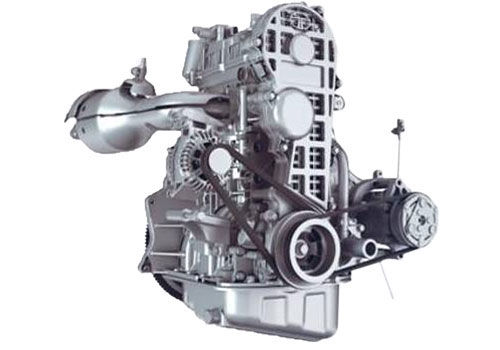
INDIA'S TATA Group unveiled on Thursday the world's cheapest car costing $2,predictions the no-frills vehicle could revolutionise how millions in India and elsewhere travel. The four-door: five-seat sportylooking can which defied prelaunch predictions that it would be little more than a "motorised bullock cart on wheels", is due to hit the roads later this year at just Rs 100,000, excluding tax, after the Tata Group cut costs to the bone. The Nano has a two-cylinder 623 cc, rear-mounted engine with a top speed of 105 kms an hour The theme from Stanley Kubrick's film 2001: A Space Odyssey played as Tata unveiled the snub-nosed Nano -- so called to appear both high-tech and small - to cheers and applause at the annual Delhi car show.

Another Indian icon

Extracts from international publications published in Hindustan Times on 12th January, 2008 -The New York Times

For MILLIONS of people in the developing world, Tata Motors' new $2,500 four-door subcompact may yield a transportation revolution as big as Henry Ford's Model T. The potential impact of Tata's Nano has given environmentalists nightmares, with visions of the tiny cars clogging India's already-choked roads and collectively spewing millions of tons of carbon dioxide into the air Industry analysts, however, say the car may soon deliver to India and the rest of the developing world unprecedented mobility "It is a potentially gigantic development if it delivers what has been promised," said John Casesa, managing partner for the Casesa Shapiro Group, a New York-based auto industry financial advisory firm.

Another The no-frill smart car

Extracts from international publications published in Hindustan Times on 12th January, 2008 - The Guardian

It HAS no radio, no boot, no airbag, no passenger-side mirror and just one long windscreen wiper. And if you want air-conditioning to deal with India's summer heat you'll have to buy the deluxe version. India's Tata Group on Thursday pulled the covers off the world's cheapest car, the Nano, which goes on sale later this year with a price tag of Rs 100,000 £1,260 - to bring motoring to the country's billion-strong masses.

For 70-year-old Ratan Tata, the group's chairman, the launch of the Nano is a landmark in transport comparable to the first powered flight by the Wright brothers, or the first moonshot. Like a modern-day version of Henry Ford, Tata's idea of an affordable car that is light and simple, yet made from high-quality materials. The result is a jelly bean shaped vehicle into which five adults can squeeze. The basic model makes no concession to luxury: its price has been kept low by using more plastic than steel, and swapping hi-tech glue for traditional welding. Rival manufacturers had questioned whether the car would meet safety standards, especially if the company plans to export such models to Europe.

Tata have been very smart and have studied the market very carefully, said Abdul Majeed, of PricewaterhouseCoopers. Like Ford's Model T, which drove the American motor boom in the early 20th century, Tata will give the Indian consumer a tough, easy to drive, cheap to maintain and, most of all, affordable car.

Tata's Nano defies expectations

Extracts from international publications published in Hindustan Times on 12th January, 2008 - The Times

It IS 3 metres long, seats four comfortably or five at a squeeze, does 65mph and aims to revolutionise travel for millions. The "People's Car" is also the cheapest in the world at Rs 100,000 rupees (£1,300) - the same price as the DVD player in a Lexus. The car is the culmination of five years' research and input from across the world, including Italy and Germany. But it was designed and made in India, defying expectations that a company best known for its elephantine lorries could manufacture a cutting-edge passenger product.

Environment worry of evolution?

Extracts from international publications published in Hindustan Times on 12th January, 2008 - The Independent
IT'S EITHER the start of a people’s evolution of the trigger for social and environmental headaches across the globe. The Tata Nano, the world’s cheapest car, was unveiled with great fan fare in the Indian capital on Thursday amid bright lights and blaring music. Designed to put a stop to a family of four travelling on a scooter, the new model from Tata Motors – and more importantly its price tag of ?1,277 – should make motoring affordable for a new class of consumer in the developing world. But green activists predict trouble ahead for countries that already have inadequate infrastructures and CO2 emissions. Tony Bosworth, from Friends of the Earth UK, said “The Tata Nano makes motoring cheaper and growing car sales in India will lead to big rises in carbon dioxide emissions. This is another blow to efforts to tackle global climate change. But per-person emissions will still be much higher in the West. Our priority must be to increase efforts to cut our own emissions and to show the rest of the world how to develop a low-carbon economy Though Tata talked of helping solve the transportation needs of rural Indians with his now car, it seems his vehicle is targeted at the country's newly aspirational middle class.

Read more...

  © Blogger templates The Professional Template by Ourblogtemplates.com 2008

Back to TOP